English for Engineers: 6 Work Scenarios, Useful Phrases, and Practice Tips
Aug 17, 2026

Many engineers know this feeling: You can read an API reference, product specification, or research paper without much trouble. Then an international coworker or client asks you a question in English, and your mind goes blank.
That doesn't mean your English is weak. When you read, you can pause, look up a word, and work through a difficult sentence. In a meeting, you may need to answer right away or explain an unexpected problem with little time to prepare. That requires fast sentence building, quick listening, and confidence under pressure. If you rarely practice speaking, getting stuck is a normal response.
This guide walks through the English situations engineers face most often, with a practice method for each one. It works whether you're new to tech or ten years in and still find speaking hard.
Quick Answer: How Should Engineers Practice English?
Memorizing more general vocabulary won't get you far. The fastest way to improve is to practice speaking about the situations you actually face at work.
Focus on four areas: technical discussions, global meetings, technical documents and emails, and everyday exposure to spoken English. Each area needs a different practice method. The goal is the same in every area. You need many chances to say complete ideas out loud instead of only reading, listening, or translating.
👉 Try Toko free for 7 days
1. Six Work Situations Where Engineers Use English
🙋🏻 What English skills do engineers need at work?
It is easy to assume that reading technical documents is enough. Once you work with global teams, though, English tends to show up in more parts of the job than you might expect.
Situation | Common tasks | English skills needed |
|---|---|---|
Reading technical documents | Product specifications, API documentation, research papers | Reading comprehension, technical vocabulary |
Global meetings | Meetings with teams in the United States, India, Japan, Europe, and other regions | Speaking, listening, quick responses |
Technical discussions | Confirming requirements and troubleshooting with international engineers | Speaking, technical vocabulary |
Work email | Communicating with overseas clients, vendors, managers, or teammates | Clear writing, precise word choice |
Presentations and reports | Explaining project status or technical plans to managers and clients | Speaking, organization, clear delivery |
Business travel and on-site work | Communicating at a client site, factory, lab, or global office | Speaking, listening, handling unexpected situations |
Even early-career engineers may need to read English documentation, write emails, review code, or join meetings with international teams. This is common in semiconductors, IC design, electronics manufacturing, and software. In these fields, customers, managers, suppliers, and teammates often work in different countries.
There is no single English test score for every engineering role in the United States. A score may matter for a school, certification, or specific employer. In daily work, you still need to explain problems, ask clear questions, and respond during real discussions.
2. Technical Discussions: Explain What You Mean Clearly
🙋🏻 How should you prepare to discuss technical problems in English?
The frustrating part is that you often know exactly what you want to say. You know why the test failed. You know what needs to happen next. But when someone asks you to explain it in English, suddenly you're piecing the sentence together word by word.
It's hard to improvise a fluent answer on the spot. Sentences come out more smoothly when you've said them before. Even rehearsing them in your head can help.
Here are four common technical discussion situations:
Situation | Useful phrase | Example |
Describe a problem | We found an issue with [component]. When [condition], [result]. | We found an issue with the login page. When users click the Submit button, they see an error message. |
Suggest a next step | I suggest we [first action] first, then [next action]. | I suggest we check the logs first, then run the test again. |
Confirm your understanding | Let me make sure I understand. You mean [your interpretation], right? | Let me make sure I understand. You mean we need to update the specification, right? |
Ask for clarification | Could you clarify [the part you want to confirm]? | Could you clarify the expected result? |
How to Practice
Write down 10 to 15 sentences you often use during technical discussions in your first language. Turn them into natural English. Then say them out loud until you no longer need to build each sentence from the beginning.
Faster translation isn't the goal. You want these sentences to come out on their own when you speak.
3. Global Video Meetings: Help Everyone Understand You
🙋🏻 How can engineers practice English for global meetings without freezing up?
Global meetings are one of the most stressful situations for many engineers. People may speak quickly, use different accents, and discuss schedules, requirements, and technical details in the same conversation. When someone asks you a question, you don't have the time you'd have when writing an email.
Engineers who use English as an additional language often face three problems:
Accent and speed: Indian English, fast American English, and other regional accents can sound very different. It becomes even harder when several people speak at once. If you cannot hear the question clearly, it is difficult to prepare an answer.
Getting interrupted: English-language meetings can move quickly. You may not be used to joining a conversation, interrupting politely, or jumping back in after someone cuts you off. The meeting may end before you have said much.
Pressure during silence: You have an idea, but you are not sure whether the English is correct. You stay quiet and spend the meeting nodding or saying only, "OK."
How to Practice
Listening to different accents is a useful first step. Still, understanding English does not automatically make speaking easier. Before each meeting, spend 5 to 10 minutes rehearsing the sentences you may need. Practice your status update and main question. Also practice how you will raise a concern and confirm the next step.
After you repeat these types of sentences many times, they become easier to use during a live meeting.
In feedback shared with Toko, an engineer at Diodes Incorporated, a semiconductor company headquartered in Plano, Texas with engineering teams across the US, Europe, and Asia, said they use the app to rehearse reports and presentations for global teams. Running through a presentation a few times beforehand takes some of the pressure off and makes the actual presentation feel more natural.
4. Technical Documents, Specifications, and Emails: Read Carefully and Write Clearly
🙋🏻 How should engineers read technical documents and write emails in English?
Reading and writing give you more time to check a word or revise a sentence. This often makes them easier to manage than speaking. Two areas are especially useful for daily practice.
Start Every Email with a Clear Purpose
Engineering emails do not need to sound impressive. They need to be accurate, organized, and easy to act on. A common problem is copying the structure of a first-language sentence into English. This can create long sentences with unclear subjects. The reader may not know what you want them to do.
You can use a simple structure for each common type of email:
Email type | Useful structure |
Report a problem | Describe the issue → Explain the impact → Share the current status → State what you need from the reader |
Make a request | Give the background → Make a specific request → Include the deadline or required format |
Confirm a requirement | State your understanding → Ask whether it is correct → Explain why you need confirmation |
Share a status update | What you completed this week → What you plan to do next → Current blockers |
Explain a delay | Explain the reason → Give the new expected timeline → State your next action |
Write Code Comments and Work Notes Directly in English
Code comments, pull request descriptions, code review notes, and bug reports are short, but engineers write them often. They create useful English practice because every sentence comes from a real work situation.
Try writing these notes directly in English. Avoid drafting them in your first language first. This small habit gives you practical repetition, and the language is tied to work you already understand.
5. The Biggest Barrier: You Can Read English but Cannot Say It
🙋🏻 Why do engineers with a solid English foundation still hesitate to speak?
Many engineers can read documentation and write an email with enough time. The difficulty appears in a meeting, presentation, or client discussion, where they need to speak immediately. Their English knowledge is still there. Most of their past practice simply focused on reading and writing instead of live speaking.
In some tech teams, English tasks fall to the few people who feel comfortable speaking. The same people lead global meetings, talk with overseas clients, and give presentations. Other engineers then get even fewer chances to practice. Over time, the skill gap grows and the workload becomes uneven.
Several habits make speaking especially difficult for engineers:
Engineering work rewards accuracy. Many engineers want to confirm that an answer is correct before saying it. Language is less exact. Speaking, noticing a mistake, and correcting it are normal parts of communication.
Many people learned English through reading and grammar exercises. They entered the workforce with strong knowledge but little experience responding in real time.
Speaking with another person adds social pressure. Worrying about mistakes or judgment can make staying quiet feel safer.
Engineers also have limited time for formal classes. Speaking gaps become easier to see as engineers take on client, leadership, or cross-team work. Starting earlier gives you more time to build the skill through short, repeated practice.
This barrier can improve with training. Chipbond is a Taiwan-based company that packages and tests semiconductors. After using AI speaking practice, employees reported speaking improvements. They also said the activities were closely tied to daily customer communication. The practice felt more like a real conversation than a textbook exercise. When the content matches your work, it is easier to use the same English in meetings and client calls.
Want to practice speaking in your own engineering scenarios?
👉Try Toko free for 7 days
6. Four Practical Ways to Improve Your English as an Engineer
🙋🏻 What is the most effective way for a busy engineer to practice English?
Your time is limited, so English practice should fit into your normal workday. Start with the situations you face most often and use the four approaches below.
Approach 1: Practice Your Work Situations, Not General Business English
A general business English course may not match an engineer's daily needs. Engineers often discuss technical issues and join global meetings. They also confirm requirements, report progress, and write work emails.
Practice the language you need to say, write, and understand at work. This makes it easier to turn practice into a skill you can use.
Approach 2: Speak More First, Then Improve the Details
Reading and listening still matter, but neither gives you much practice responding in real time.
Try to set aside 15 to 20 minutes for speaking each day. At first, do not stop every time you make a mistake. Finish your idea. Then review the feedback and try again. Your first goal is to make speaking a regular habit.
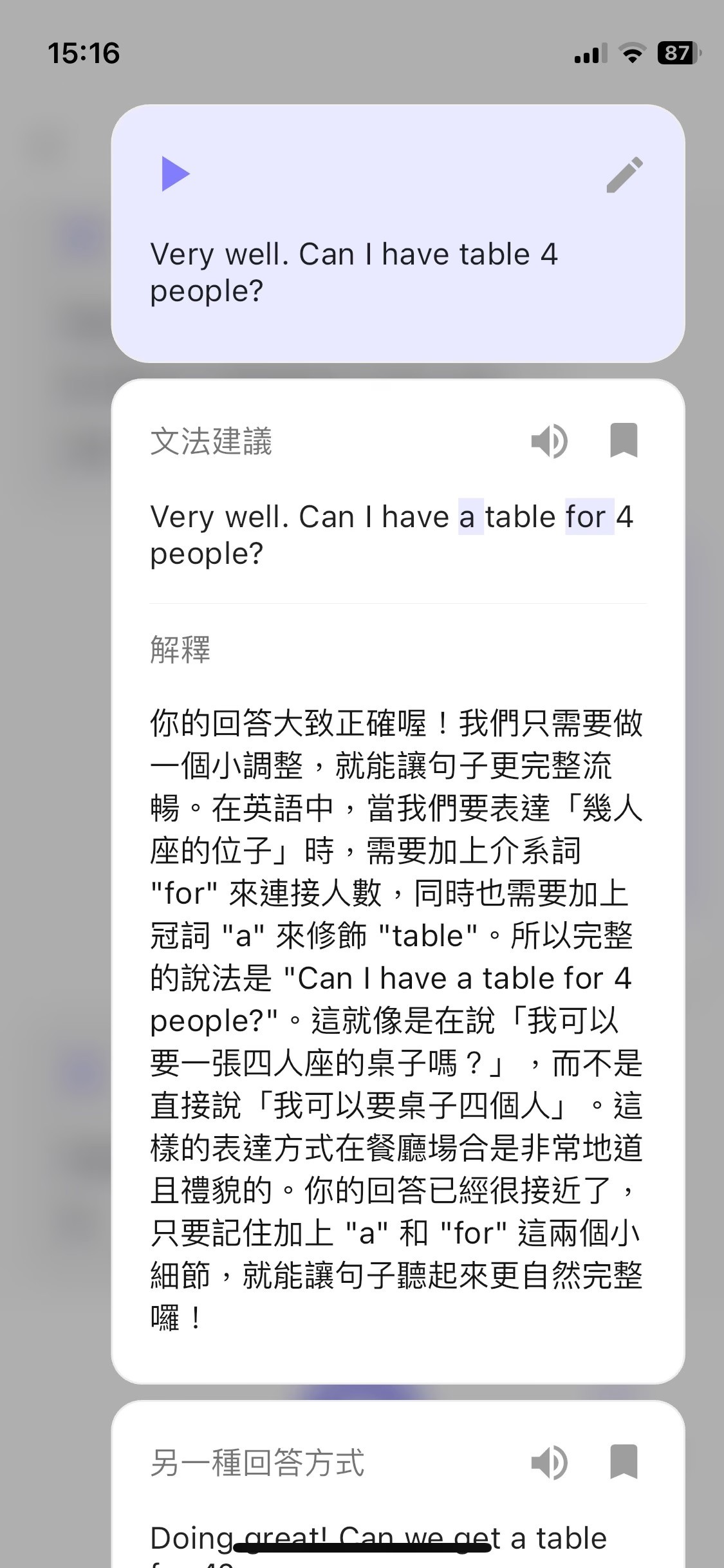
An AI speaking tool can make this process easier. After you speak, it can point out grammar or word-choice problems. It can also suggest a more natural way to express the same idea. You don't have to catch every error yourself.
Approach 3: Train Your Ear for Different Accents
The English in a global meeting may not sound like the American English in a course recording. Your coworkers may come from India, Germany, Japan, the United Kingdom, Australia, or many other places. Hearing different accents helps you adjust to changes in rhythm, stress, and pronunciation.
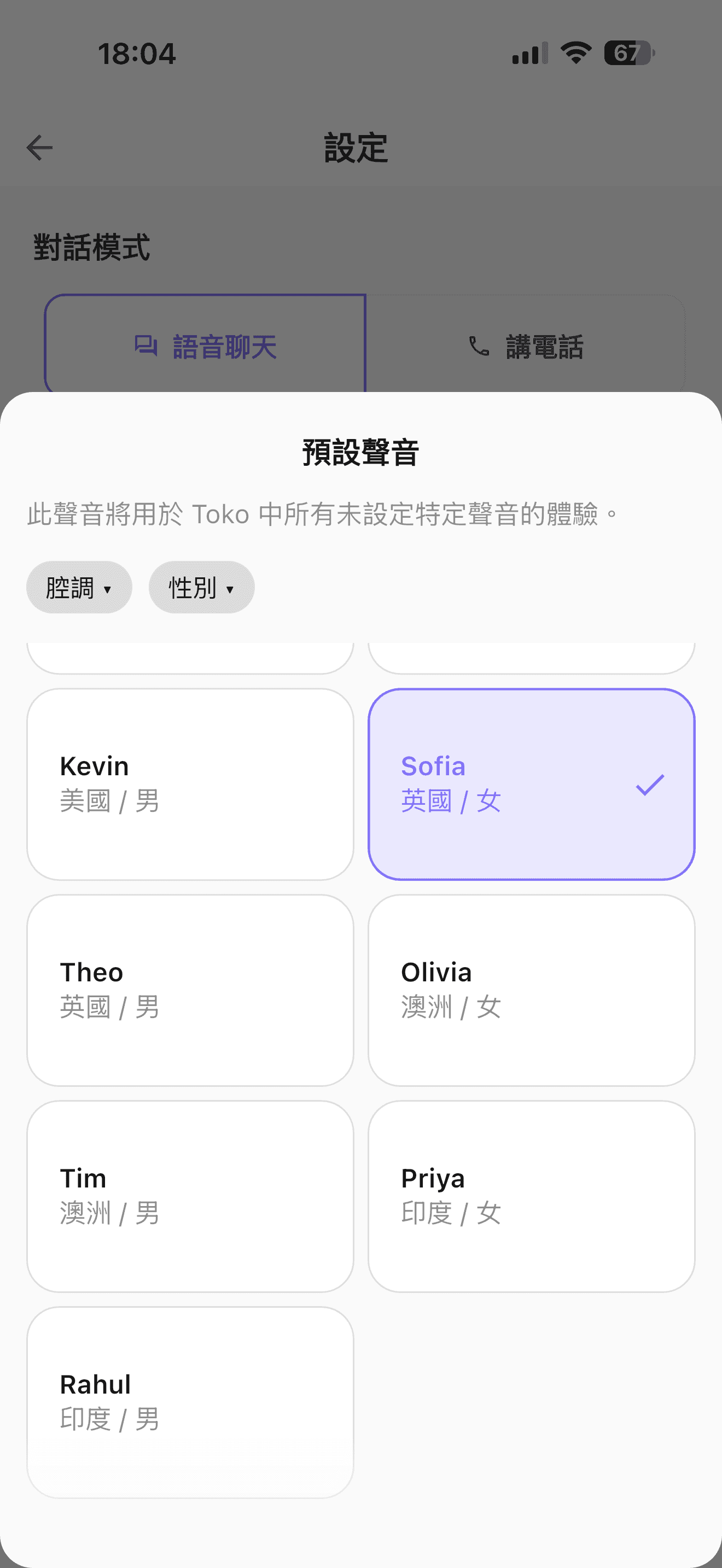
Toko includes American, British, Australian, and Indian accent options. You can switch between them during practice so that your listening experience is not limited to one voice.
 |  |
|---|---|
During a Toko conversation, the AI gives grammar feedback and suggests more natural phrasing so you can see what to improve. | Toko's Indian English accent option is useful for engineers who regularly work with colleagues and vendors in India. |
Approach 4: Use Short Breaks During the Day
A train ride can become a short practice session. You can also practice while a test run or build finishes, or for 10 minutes after lunch. These small windows are easier to use when the tool does not require a scheduled lesson.
A manager at Salcomp shared that online AI speaking practice can feel more engaging and useful for engineers. Salcomp is a Finnish electronics maker with operations in the United States and other global markets. Engineers can practice whenever they have a few free minutes instead of working around a teacher's schedule. This helps when projects and meetings break the day into small pieces.
👉 Try Toko free for 7 days and create a speaking scenario based on your own job.
Comparing English Practice Methods for Engineers
🙋🏻 There are many ways to practice English. Which one should an engineer choose?
Feature | Live classes with a tutor | Self-study with YouTube or podcasts | Language exchange | AI speaking app such as Toko |
Scheduling | Requires a set lesson time | Available anytime | Depends on another person | Available 24/7 with no booking |
Chances to speak | Yes | Very limited | Yes | Yes |
Practice based on your job | Sometimes | Usually limited | Usually limited | Custom engineering scenarios |
Immediate grammar feedback | Yes | No | Sometimes | Available throughout practice |
Pressure when speaking | Medium to high | None, but little output | Medium | Low, with room to make mistakes |
Cost | High | Free or low cost | Usually free | Moderate |
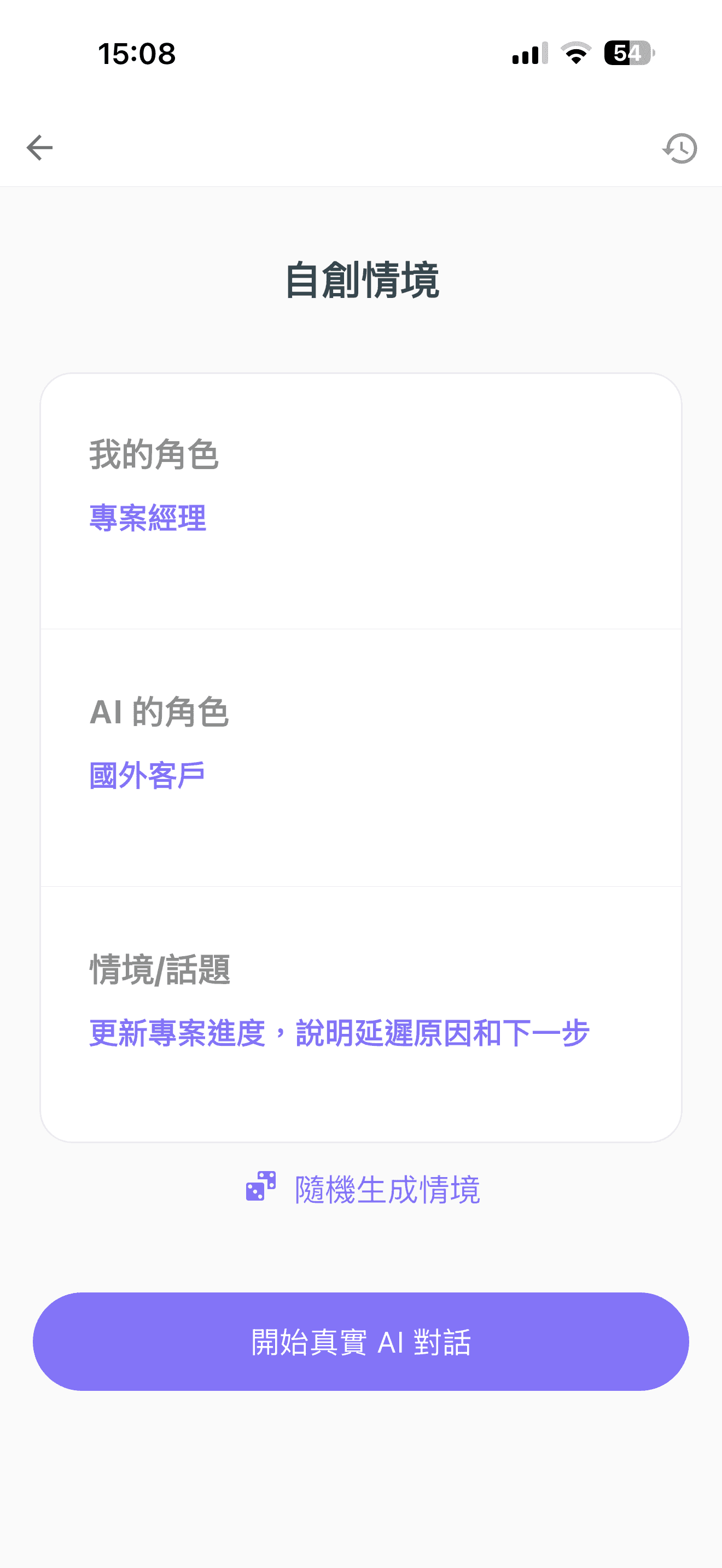
If you want practice that closely matches your engineering work, use Toko's custom scenario feature. You can create situations such as:
Confirming test requirements with an engineer in India
Explaining the reason for a delay to an international manager
Preparing next week's project update in English
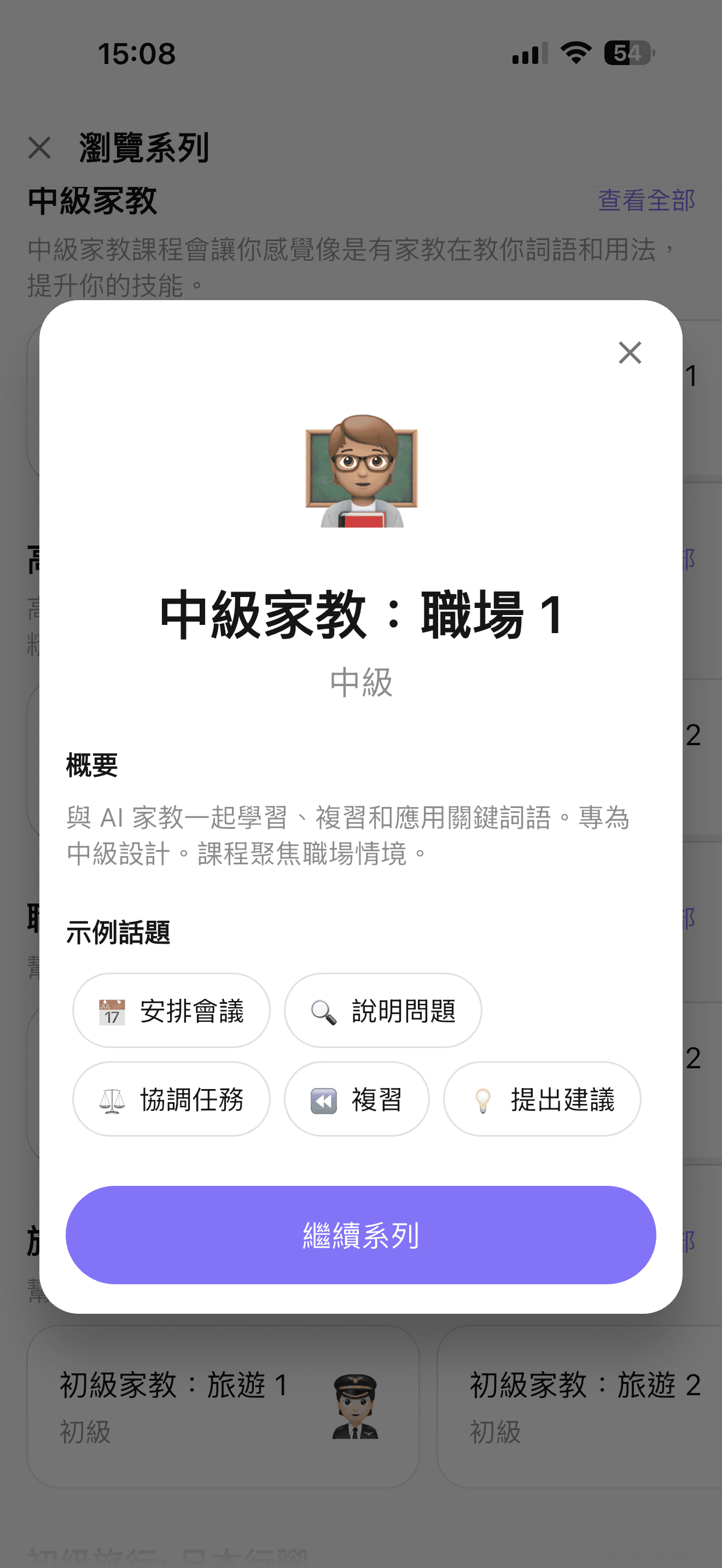
You can also use the Workplace English tutor bundles for more structure. They cover technical discussions, global meetings, and everyday workplace communication.
Want to compare the learning structure, feedback, and features of two AI English speaking apps? Read Toko vs. Learna AI.
 |  |
|---|---|
Toko's custom scenario feature lets engineers practice the English situations they face at work. | Toko also includes structured Workplace English tutor bundles for step-by-step practice. |
Frequently Asked Questions About English for Engineers
Q1: What Level of English Do Engineers Need?
There is no universal English test score for engineering jobs in the United States. The level you need depends on the role. An engineer who mainly reads documentation may have different needs from a technical lead who runs client meetings.
A practical standard is whether you can complete the communication tasks in your job. Can you explain a problem? Can you ask for clarification and understand the main point of a meeting? Can you write a clear update and confirm the next step? A test score can describe part of your ability, but it does not replace these real tasks.
Q2: Do Software and Hardware Engineers Need the Same English Skills?
The situations differ, but both groups need clear speaking and technical vocabulary.
Software engineers often use English in code reviews, technical documents, issue tracking, and global meetings. Hardware engineers often read component specifications and confirm details with overseas suppliers. They may also communicate on-site during business travel. Choose practice material that reflects your own role.
Q3: How Can Engineers Overcome the Fear of Speaking English?
Many engineers get stuck because they rarely practice responding in real time. You can take your time when reading and revise an email before sending it. Speaking requires you to build the message within a few seconds.
Choose one work situation you face often. It might be a status update, requirement review, or troubleshooting call. Practice that situation many times. Toko's AI conversations let you rehearse a real scenario. After you speak, you can review grammar and word-choice feedback. Repetition makes the situation feel more familiar and lowers the pressure of starting from zero.
👉 Try Toko free for 7 days and create your first work scenario.
Q4: What Is the Best Way to Learn Engineering Acronyms in English?
Memorizing a long list is usually hard to maintain. When you find an unfamiliar acronym, look up its definition in English instead of translating it first. Then save it in a vocabulary list organized by situation, product, or project.
A list built from your own work contains the terms you need in meetings and documents. This makes it more useful than a general vocabulary book.
Q5: How Long Does It Take to Speak Confidently in Global Meetings?
There is no fixed timeline. Your starting level, meeting frequency, and practice consistency all matter.
If you can already follow part of a meeting and answer simple questions, try using three months as your first checkpoint. Aim for 15 to 20 minutes of speaking each day. Track how quickly you answer and how often you speak without translating first. Also note how many prepared phrases you can use naturally.
Start with one repeated situation, such as a weekly cross-team update. Practice the 10 sentences you use most. Keep going until you can say them without building each one from the beginning. Build confidence in that situation before adding the next one.
Q6: What Resources Can Engineers Use to Practice English?
For listening, look for recorded technical talks, engineering channels, and sample global discussions on YouTube. After watching, summarize the main point out loud. You'll get more out of it than you would by listening passively.
For technical vocabulary, use the documentation you already read at work. Save new terms by project or situation and write one sentence showing how you would use each term.
For speaking, Toko's custom scenario feature lets you describe your own work situation and practice it as a conversation. This is more relevant than repeating a general textbook dialogue.
👉 Try Toko free for 7 days and create your first work scenario.
Q7: Where Should Engineers in Tech Start?
Start with the English situation that caused the most trouble in your recent work. Do not automatically return to a grammar book or a general vocabulary list if reading and grammar are already your stronger skills.
Think about the last time English slowed you down. Maybe you wanted to respond in a global meeting but could only say, "OK." Perhaps you could not build a sentence when asked for a project update. You may have spent 30 minutes editing a short email because you were unsure how it sounded. That moment shows you what to practice first.
During the first week, do one thing. Write down the 10 sentences you use most in that situation. Turn them into natural English and say them out loud every day. For a global meeting, begin with progress updates. Also practice ways to ask someone to repeat or clarify a point. You will use them in almost every meeting.
Reading sentences off a screen gets dull fast, and it doesn't tell you whether your response holds up in a real exchange. With Toko's custom scenario feature, you can enter a situation such as "confirming test requirements with an engineer in India." The AI can play the other person and continue the discussion. It can also give you grammar and phrasing feedback. Once one situation feels comfortable, move to the next. Regular practice matters more than one long session.
Ready to Practice English for Your Own Engineering Work?
Toko offers a full 7-day free trial. During the trial, you can build custom scenarios from your own job. Practice discussing test requirements, explaining a project delay, or opening a global meeting.
👉 Try Toko free for 7 days and create your first work scenario.
If your employer offers a learning and development budget, ask whether a language-learning subscription is eligible for reimbursement. Requirements vary by employer, so check the company's policy before you submit a purchase.
Further Reading
Employees at Different English Levels? A 4-Step Corporate English Training Plan
Can ChatGPT Help You Learn English? When an AI Speaking App Is the Better Choice
About the Author
 | Connie Lin leads marketing content and localization at Toko. She works closely with product, QA, and user feedback, which gives her a close view of how learners actually use AI tools and where they struggle. Her work focuses on making English learning feel more natural, practical, and easier to stick with over time. |